Fading, chalking or a tired sealer
These may point to cleaning, preparation and resealing when the underlying finish remains bonded and sound.
Check: adhesion, stains, previous coating type and compatibility.
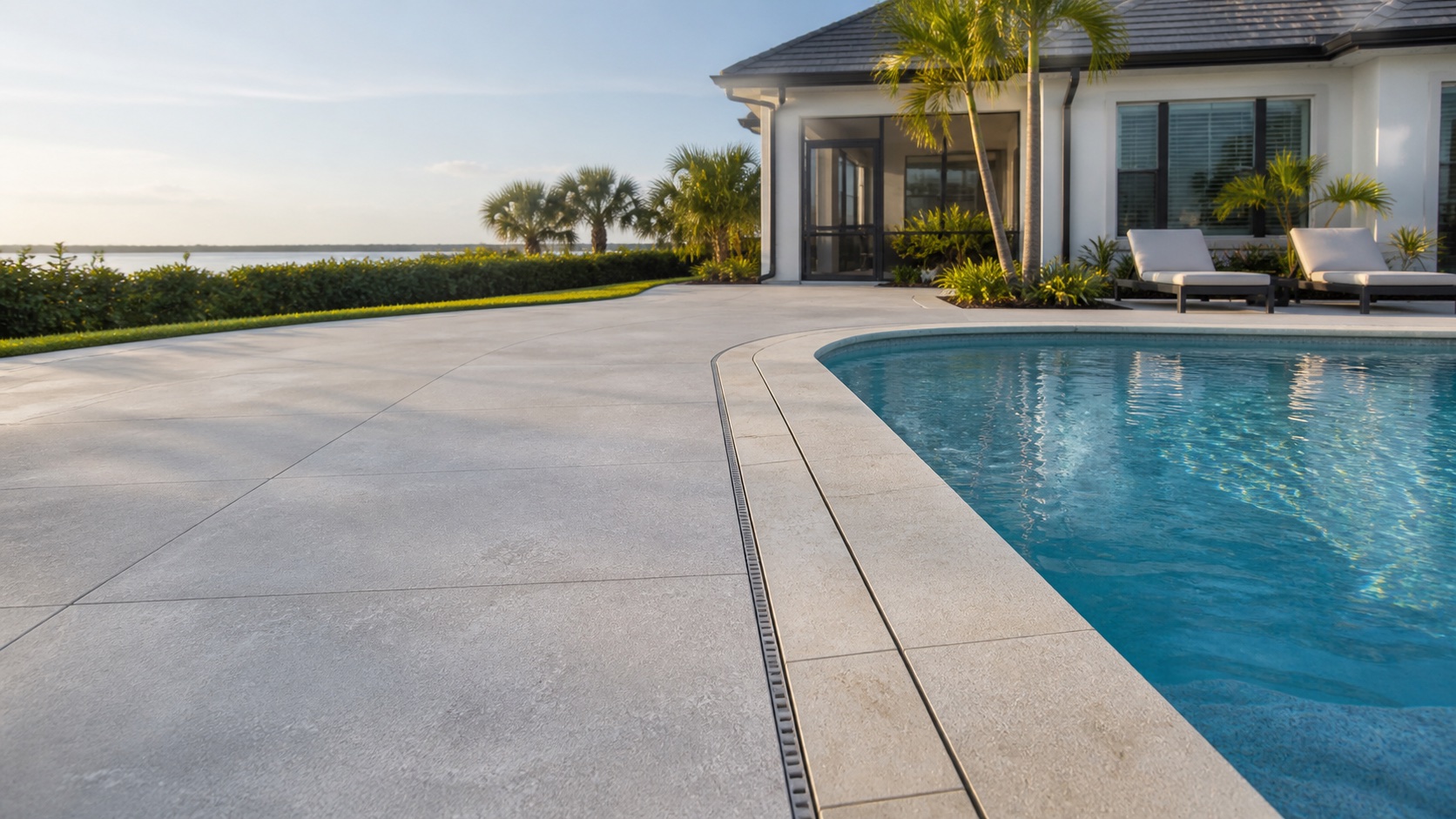
Pool deck planning for Port Orange and the Volusia coast
Compare repair, resurfacing, coatings, pavers, drainage and proposal details before deciding what your pool deck needs.
Surface conditionCracks, wear and delamination
Water managementDrainage, coping and joints
Finish choiceTexture, maintenance and exposure
Read the deck before choosing the finish
Start with what you can see, where it appears and what happens after rain. A proposal should explain the cause it is addressing—not just name the material going on top.
These may point to cleaning, preparation and resealing when the underlying finish remains bonded and sound.
Check: adhesion, stains, previous coating type and compatibility.
Loose material needs to be located and removed. Covering it can leave the new system bonded to a layer that is already failing.
Check: how failed areas will be found, removed and rebuilt.
Movement can telegraph through a new finish. Crack treatment may manage appearance without promising that movement has ended.
Check: whether the crack is dormant, moving or tied to settlement.
Standing water and movement at the pool edge deserve their own scope. A decorative layer alone does not create drainage or stabilize coping.
Check: elevations, drains, joints and who handles pool-edge work.
Four different interventions
No option is automatically “best.” The useful comparison is what each one changes, what it leaves in place and which unknowns must be resolved first.
Targeted
Addresses defined cracks, spalls or isolated failures while keeping most of the existing deck.
Preserve
Refreshes a compatible, well-bonded finish without adding a new cementitious overlay.
Renew
Adds a new coating or overlay system after the existing deck has been assessed and prepared.
Rebuild
Removes and rebuilds areas where the slab, elevations or layout cannot support the intended result.
Finish is a system, not a color chip
Ask for the manufacturer, product line, layer sequence and current data sheets. Texture, color and sealer choices can change heat, traction, maintenance and appearance.
A familiar knockdown look over prepared concrete. Confirm surface preparation, thickness, color coat, cure window and repair compatibility.
Troweled or patterned systems can provide more design range. Ask how joints and cracks remain expressed through the finish.
Primer, body coat, texture media and topcoat should be named as one compatible system—not a collection of generic products.
Review finished elevation, coping transitions, door clearances, edge restraint, drainage and the suitability of the existing slab.
A proposal you can compare
A lower number is not a useful bargain if preparation, drainage details or the actual product system are left undefined.
Cleaning method, removal of loose material, surface profile, patching products and how moving cracks will be handled.
Existing low spots, drain condition, slope, pool-edge transitions and which joints will remain functional through the finish.
Manufacturer, product names, layer sequence, coverage or thickness, color and any required primer or sealer.
Finish sample, wet-use expectations, weather-dependent schedule, first-use instructions, cleaning and resealing guidance, exclusions and remedy.
Volusia coast exposure
Frequent rain makes slope, drains and low spots easy to overlook until the deck is finished. Coastal humidity, strong sun and windborne salt also make product selection and maintenance worth discussing with the exact system’s manufacturer guidance in hand.
Lighter colors may reduce solar heat gain relative to darker choices within the same system, but “cool” is not a guarantee. Texture may improve wet traction, but no walking surface is slip-proof. Compare installed samples and written technical data.
After rain Photograph ponding and the path water takes.
At the pool edge Note coping movement, open joints and sealant gaps.
In full sun Compare actual samples, not screen colors.
Geographic focus
These are planning distinctions, not claims that a contractor is available in every location. Confirm the permitting authority for the property and the contractor who would sign the agreement.
Start with the City Building Department when the scope changes more than the finish. Ask whether slab, coping, drainage or pool-barrier work changes the permit path.
Beachside and mainland exposure can differ. Put salt, wind-driven rain and the exact maintenance cycle on the product conversation.
Document what happens during a hard rain. Low spots and drain capacity should be priced separately from decorative resurfacing.
Confirm whether the address is inside the city or unincorporated Volusia County before relying on a permitting or contractor-registration answer.
Questions worth asking early
No. A coating or overlay can renew a suitable surface, but it does not stop active settlement, repair damaged coping or correct a drainage failure by itself. Ask the evaluator to identify the likely cause of movement and to separate substrate work from finish work in writing.
No surface should be described as cool or slip-proof without qualification. Color, sun exposure, product, texture, installation and maintenance all affect surface temperature and wet traction. Compare physical samples and the current technical data for the exact proposed system.
Return-to-service time is product- and weather-specific. Temperature, humidity, rain risk, layer thickness and the manufacturer’s instructions matter. The proposal should name the product and state the installer’s planned cure window rather than relying on a generic timeline.
Permit requirements depend on the actual scope. A finish-only project is different from work that changes the slab, drainage, coping, pool barrier or other regulated components. Confirm the scope with the City of Port Orange Building Department before work begins.
Ask which business will sign the contract, then verify the individual license and qualifying business through Florida DBPR and check local status with Volusia County. Confirm insurance directly and make sure the written proposal assigns permit responsibility.
Project request
Share what you are seeing and which direction you are considering. The site operator will review the request. If an independent contractor match is available, the details may be shared for the same project.